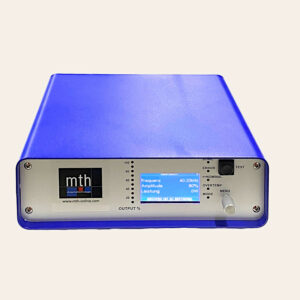
Ultrasonic generators

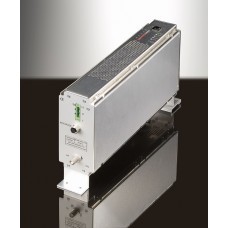
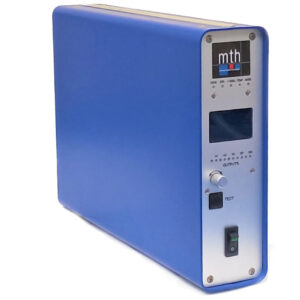
mth Ultraschalltechnologie manufactures the right ultrasonic generator for all applications — with frequencies ranging from 20 kHz to 40 kHz. Our ultrasonic generators precisely generate the alternating voltage required to operate the oscillating system.

Further information is available on our page “Customised ultrasound solutions” »

  • The K1 series of ultrasonic generators is perfectly suited to our hand-held welding guns and, thanks to its low weight, can also be used on the move.
  • The ultrasonic generators of the K5 series, which are equipped with outputs of up to 2,000 W, are suitable for higher outputs.
  • For use in special-purpose machines, our K3 series includes a space-saving ultrasonic generator for installation in control cabinets.

Our references for industry solutions

Are you looking for solutions for precise plastic connections?

In this brochure, we show you how industry leaders in the automotive, medical technology, packaging, and industrial sectors are already successfully relying on special-purpose machines from mth Ultraschall.

Get special insights into the possibilities of ultrasonic welding!

Integrating ultrasonic generators

Depending on the application, the ultrasonic generators can be controlled either via potential-free contacts or directly via the PLC using ProfiNet, for example. This allows the integrated microcontroller to specify time and energy values and, after appropriate parameterisation, the ultrasonic generator even offers simple sequence control.

Welding on time and energy

All generators have the “Weld on time” and “Weld on energy” functions as standard. When welding to a preset time value, the generator interrupts the ultrasonic output after the time has elapsed. At the same time, the energy emitted until the time has elapsed is displayed. If you have achieved a satisfactory welding result, you can specify the energy determined in this way as the target value. The generator now interrupts the sound emission as soon as the desired energy has been emitted, regardless of the contact pressure.

General function of ultrasonic generators in the welding of plastics and metals

Ultrasonic generators are the central control centre in ultrasonic technology. They ensure that plastics and metals are efficiently welded, cut or sieved in conjunction with the other ultrasonic components.

Other key components include: ultrasonic converters, ultrasonic boosters, sonotrodes, feed mechanisms and control systems, which are used in our ultrasonic welding machines in a particularly compact and robust design.

The role of the ultrasonic generator in welding

In ultrasonic welding, the generator is the control centre for the entire process. It generates high-frequency electrical energy and controls it so that it meets the requirements of the material and the welding task. This electrical energy is then converted into mechanical vibrations that bond the workpiece at the molecular level.

The task of the ultrasonic generator is to ensure a constant and precise supply of energy that enables the welding process without damaging the material.

How does an ultrasonic generator work during welding?

The operation of an ultrasonic generator when welding plastics and metals comprises three essential steps:

Generation of high-frequency signals
The ultrasonic generator converts conventional electricity into high-frequency electrical vibrations. The frequency is usually between 20 kHz and 40 kHz, depending on the material and application. These frequencies are ideal for joining plastics or metallic materials in a matter of seconds.

Adaptation to welding requirements

The generator adapts the signals generated to the specific requirements of the welding process. Factors such as welding time, power and amplitude are precisely controlled to ensure an optimal connection. The adjustment is made either manually or via automatic control loops based on sensors in the welding system.

Transmission of vibrations

The electrical signals are transmitted to a transducer, which converts them into mechanical ultrasonic vibrations using the piezoelectric effect. These vibrations are transmitted to the workpiece via a booster and a tool, the sonotrode. The high-frequency vibrations generate frictional heat, which locally melts the surfaces of the materials, creating a strong bond.

The three main tasks of ultrasonic generators

The quality of ultrasonic welding depends largely on the precision of the generator. Here are some key advantages:

Precise energy supply: The generator ensures constant power, resulting in uniform weld seams.
Flexibility: Different materials and workpiece sizes require different frequencies and amplitudes. The generator allows for these adjustments.
Effizienz: Ultraschallschweißen ist schneller und energieeffizienter als herkömmliche Schweißverfahren, dank der präzisen Steuerung durch den Generator.

Areas of application in the welding of plastics and metals

Ultrasonic generators are used in various industrial applications, including:

Plastic welding: Ideal for thermoplastic materials such as ABS, PE or PP. Typical products include complex plastic parts in automotive engineering, housings for electronic devices, packaging and medical plastic products.
Metal welding: Primarily for thin layers and specific applications such as battery cells or electrical contacts.

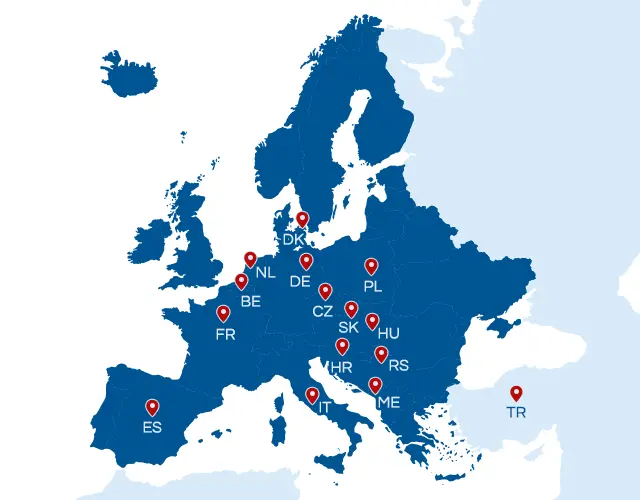
Internationale Präsenz durch
gewachsene Geschäftsbeziehungen

mth entwickelt und fertigt Ultraschalllösungen für individuelle industrielle Anforderungen. Langjährig gewachsene Geschäftsbeziehungen sorgen dafür, dass Ultraschallkomponenten, Handschweißgeräte und Sondermaschinen europaweit und international im Einsatz sind.

Do you have any questions about ultrasonic generators?

We are happy to help you personally with your individual wishes and requirements:

Other ultrasonic components

Ultrasonic converter

Variety of ultrasonic converters

mth offers ultrasonic converters for common frequencies such as 20 kHz, 30 kHz, 35 kHz and 40 kHz. Der Konverter wandelt den hochfrequenten Wechselstrom des Ultraschall-Generators in mechanische Schwingungen mit Amplituden von etwa 5-12 µm um.

Ultrasonic boosters

Our ultrasonic boosters

The ultrasonic boosters (amplitude transformers) regulate the input amplitude at the sonotrode using a transmission ratio of usually 1:1 to around 1:3. Our boosters are available for 20 kHz, 22 kHz, 30 kHz, 35 kHz and 40 kHz.

Various sonotrodes

Energy-efficient welding

For more than two decades, we have been manufacturing sonotrodes in-house for various ultrasonic systems from different manufacturers suitable for common applications such as welding, cut-off welding, riveting, embossing, punching and cutting.